

Going from black hair to platinum blonde is possible, but whether it can happen in one session depends far more on your hair history and condition than on how determined you are to reach the lightest shade.
In the salon, the biggest mistake is treating every head of black hair as if it starts from the same place.
Natural black hair, previously coloured black hair and hair that has been repeatedly covered with dark box dye can all react very differently to lightener.
The practical consequence is simple: one client may lift relatively evenly, while another reveals layers of red, orange or patchy artificial pigment long before the hair is light enough to tone platinum.
If your goal is an icy or near-white blonde, the safest plan is based on how far your hair can lift while still keeping enough strength and elasticity to continue the transformation later.
Can You Go From Black Hair to Platinum Blonde in One Session?
Sometimes very healthy, untreated dark hair can make a dramatic change in one long appointment, but black-to-platinum should never be treated as a guaranteed one-session service.
Platinum blonde needs a very pale underlying base before toner can create a cool finish.
If the hair is still orange or strongly yellow, toner cannot simply turn it platinum because toner adjusts tone; it does not replace the lifting stage.
The real stopping point is the condition of the hair, not the colour chart.
If further lightening would compromise elasticity or increase breakage, stopping at a warmer intermediate shade is the safer decision even when the final goal is platinum.
Natural Black Hair vs Black Box Dye: Why It Matters
One of the most important questions during a colour consultation is whether the black pigment is natural or artificial.
Natural Black Hair
Virgin hair contains natural melanin but no layers of previous artificial colour. It can still require significant lift, but the colourist is dealing with the hair’s natural pigment rather than trying to remove years of deposited dye.
Previously Dyed Black Hair
Permanent dark colour can leave artificial pigment through the lengths, and repeated applications may create different levels of build-up from roots to ends. This can make lightening slower and less even.
Black Box Dye
Repeated box dye is particularly important to disclose because the lengths may contain several overlapping colour applications. Hair that looks uniformly black from the outside can reveal very different red, orange or dark bands once the removal process begins.
That is why telling your colourist your full colour history matters, including colours that seem to have faded or appointments from many months ago.
Why Does Black Hair Turn Red, Orange and Yellow When Bleached?
Dark hair does not jump directly from black to pale blonde because lightening gradually exposes the warm underlying pigments within the hair.
As the darker pigment is broken down, the visible result commonly moves through warmer stages before reaching a pale yellow base.
| Visible stage | What it usually means | Possible next step |
|---|---|---|
| Dark brown / red-brown | Early dark pigment has lifted | Continue only if the hair condition allows |
| Red / orange | Strong warm pigment is still present | Further controlled lifting or a deliberate warm transition shade |
| Orange / gold | The hair is lighter but not ready for a true platinum toner | Refine or continue lifting at a later stage |
| Yellow | Most dark pigment has been removed | Further lift may be required for very cool blonde |
| Pale yellow | The base is light enough for many platinum or icy toners | Tone according to the desired final result |
Seeing orange during the process does not automatically mean the colour has gone wrong.
It often means the hair has reached one of the normal intermediate stages between black and very light blonde.
Why Can’t Toner Turn Orange Hair Platinum?
Toner changes the tone of hair that is already light enough; it does not create the missing levels of lift.
This is an important distinction because platinum is not simply an orange or yellow base covered with a very cool toner.
The hair first needs to reach a sufficiently pale underlying shade, after which toner can neutralise remaining warmth and create a cooler platinum, pearl or icy finish.
If the base is too dark, using a stronger toner does not solve the problem.
What Determines How Many Sessions You Need?
There is no honest universal number because the same starting colour can hide completely different colour histories.
- Natural or artificial pigment. Previously coloured black hair generally creates more variables than virgin dark hair.
- Number of previous colour applications. Repeated dark colour through the lengths can create layers of pigment.
- Previous bleach or highlights. Already-lightened sections may be more fragile than darker areas around them.
- Hair elasticity. Hair that stretches excessively or feels gummy when wet cannot safely be pushed like strong untreated hair.
- Porosity. Uneven porosity can cause different sections to lift and absorb toner differently.
- Hair density and length. Long or very dense hair creates more variation and requires more careful sectioning and product control.
- Your exact blonde goal. Creamy blonde, pale beige and icy platinum do not all require the same underlying base.
Current professional guidance varies widely on the exact number of appointments because these variables matter so much, which is precisely why a fixed promise before assessing the hair is unreliable.
Why a Strand Test Matters Before a Major Blonde Transformation
A strand test gives the colourist useful information that a visual inspection alone cannot provide.
By testing a small section, the stylist can see how quickly the pigment lifts, which underlying tones appear and how the hair behaves during processing.
This is particularly useful when the hair has been coloured dark before, because artificial pigment can lift unpredictably across different sections.
A strand test is not a guarantee of the final result.
It is a diagnostic step that helps establish whether the planned transformation is realistic and how cautiously the first full appointment should proceed.
What Might Happen During the First Session?
The first appointment is often about discovering how the hair responds rather than forcing it immediately to the final shade.
Depending on the starting point, the stylist may focus on removing dark pigment, lifting as evenly as possible and creating a wearable intermediate colour.
That intermediate stage might be brown, copper, caramel, dark blonde or another warmer shade depending on how far the hair safely lifts.
Stopping at an attractive transitional colour is not a failed platinum appointment.
It can be part of a planned route that protects enough hair integrity for the next stage.

What Happens If Black Hair Is Lightened Too Aggressively?
The main reason a responsible colourist may stop before platinum is that lightening changes the structure of the hair as well as its colour.
- Breakage. Weakened strands can snap during brushing, washing or further chemical processing.
- Loss of elasticity. Over-processed hair may stretch excessively when wet and fail to return to its normal shape.
- Gummy texture. Severely compromised hair can feel soft, sticky or elastic when wet rather than strong and flexible.
- Extreme dryness. Repeated chemical processing can leave the surface rough and difficult to manage.
- Uneven colour. Fragile or previously coloured sections may lift differently, creating bands or patchiness.
- Scalp irritation. Lightener is a strong chemical service and should not be pushed beyond what the scalp and hair can tolerate.
Once the structure has been seriously compromised, there is no toner or mask that can restore the hair to its original untreated state.
Does Olaplex Mean You Can Bleach the Hair Further?
Bond-building products can support chemically processed hair, but they do not make unlimited bleaching safe.
Style Avenue offers an Olaplex chemical upgrade that can be added to colour or bleach services, as well as professional treatments for damaged and colour-treated hair.
These treatments are useful tools within a colour plan, but the colourist still needs to judge the hair’s elasticity, breakage and overall condition before deciding whether further lift is appropriate.
Our guide to professional hair treatments and bond repair explains how repair, conditioning and smoothing treatments differ.
How Should You Prepare for a Black-to-Platinum Consultation?
The more accurate information your colourist has before the service, the better the plan can be.
- Bring realistic reference images. Platinum can mean icy white, pearl, silver, creamy or slightly beige blonde.
- Explain your full colour history. Include box dye, salon colour, highlights, bleach and colour removers.
- Mention chemical services. Previous straightening, perming or other chemical treatments can affect the plan.
- Be honest about home colouring. Even an old dark dye can matter if it remains within the lengths.
- Discuss maintenance. Platinum requires ongoing root work, toning and careful home care.
Style Avenue’s hair colouring services in Staines include Platinum Card Roots, Platinum Card Full Head and toner or colour refresh services, so the consultation can be built around both the initial transformation and ongoing maintenance.
How to Look After Hair Between Lightening Sessions
What you do between appointments can influence how well the hair tolerates the next stage.
- Follow the aftercare recommended by your colourist. The right routine depends on how the hair feels after the service.
- Use suitable conditioning or repair treatments. Chemically processed hair often needs more targeted care than untreated hair.
- Reduce unnecessary heat. Frequent high-temperature styling adds another source of stress to already-lightened hair.
- Use heat protection. Apply it before blow-drying, straightening or curling.
- Do not bleach the hair yourself between appointments. Overlapping lightener onto previously processed sections can create severe weak points.
- Do not repeatedly colour the hair dark again. Adding more permanent pigment can make a future return to blonde more complicated.
How Do You Maintain Platinum Blonde Hair?
Reaching platinum is only the first part of the commitment because very light hair needs both colour maintenance and condition management.
- Use purple shampoo carefully. Purple shampoo can help neutralise yellow tones, but more is not always better. Overusing heavily pigmented products can make very porous blonde hair look dull, grey or violet in some areas.
- Maintain conditioning and repair. Lightened hair often needs a balance of conditioning and structural support according to how it feels rather than a rigid weekly formula.
- Protect it from heat. Platinum lengths have already undergone substantial chemical processing, so repeated high heat can increase dryness and breakage. Use heat protection before blow-drying, straightening or curling.
- Plan root maintenance before it becomes a correction. Once you have an all-over platinum result, regular root maintenance helps avoid creating a much larger dark regrowth area that needs to be blended back into previously lightened hair.
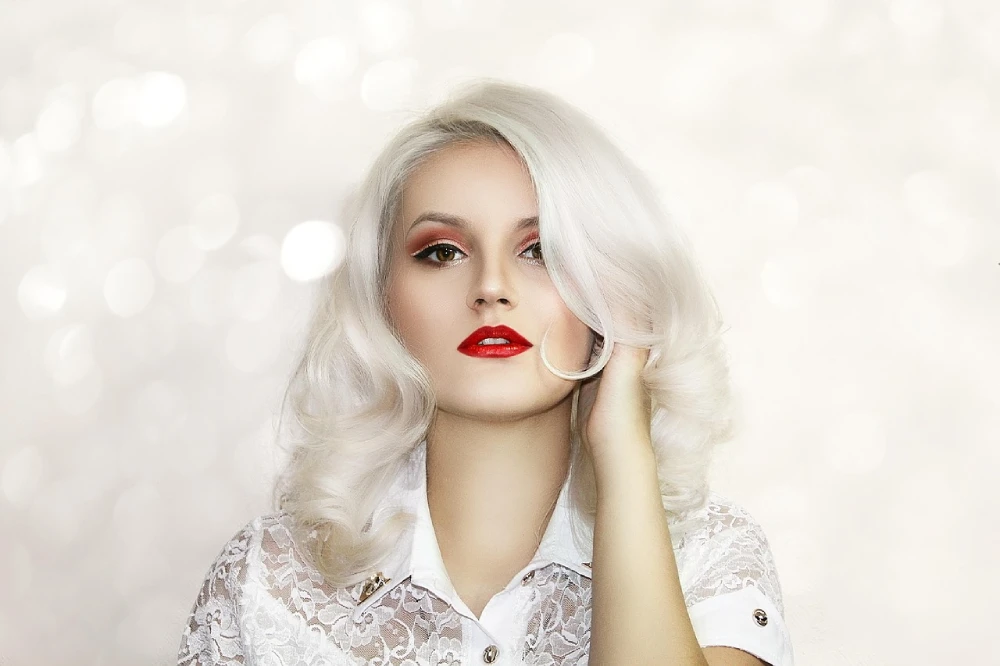
Healthy Platinum Is Better Than Fast Platinum
The safest transformation stops when the hair has reached its limit for that appointment, even if the colour has not yet reached the final platinum target.
The goal is not simply to remove as much pigment as possible; it is to arrive at the lightest suitable shade with hair that can still be worn, styled and maintained.
Frequently Asked Questions
How many sessions does it take to go from black hair to platinum blonde?
There is no reliable fixed number. Natural colour, previous black dye, hair condition, porosity, length and the exact platinum shade all affect the timeline, so the number of sessions should be estimated after consultation and, where appropriate, a strand test.
Can virgin black hair go platinum in one session?
Some strong, untreated hair may lift dramatically in one long appointment, but it should never be promised before assessment because the colourist still needs to stop if the hair reaches its structural limit before the desired shade.
Why is black box dye harder to remove?
Repeated permanent dark colour can create layers of artificial pigment through the lengths, and those layers may lift unevenly or reveal different warm tones, making the process less predictable than working with virgin hair.
Why does my hair turn orange when going blonde?
Orange is a normal underlying warm stage that often appears as darker pigment is removed. It does not automatically mean the lightening has failed; it means the hair has not yet reached the pale base needed for a very cool blonde.
Can toner make orange hair platinum?
No. Toner can neutralise unwanted warmth in hair that is already light enough, but it cannot replace the additional lift needed to take an orange base to pale yellow.
Does Olaplex stop bleach damage?
Olaplex can support bonds during and after chemical processing, but it does not make unlimited lightening safe. The condition and elasticity of the hair still determine how far a colourist should proceed.
Can previously bleached hair be taken to platinum?
Possibly, but previously lightened sections need careful assessment because they may be weaker than darker regrowth or unprocessed areas. Overlapping bleach onto fragile lengths can increase the risk of breakage.
Thinking About Going From Dark Hair to Platinum?
The first step should be an honest assessment of your current colour, previous dye history and hair condition rather than a promise that the final shade can be achieved in one visit.
At Style Avenue in Staines, our colour team can assess your starting point, discuss your platinum goal and build a realistic route towards it while keeping hair condition at the centre of the plan.