
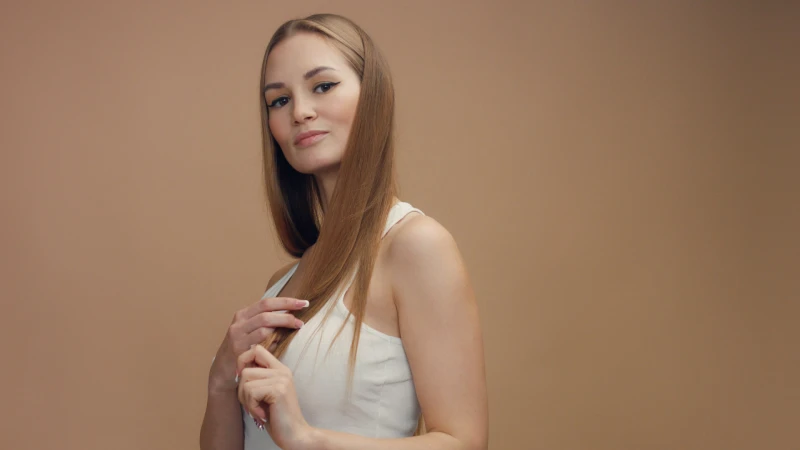
Glass hair is the ultra-smooth, reflective finish that makes the surface of the hair catch light almost like polished glass.
The important point is that “glass hair” describes a result rather than one universal treatment formula.
Depending on your starting texture and condition, that result may come from a professional shine treatment, glossing service, smoothing treatment, precision blow-dry or a combination of those steps.
That is why the same approach does not suit every client. Fine hair may need lightweight shine without too much smoothing, while coarse or frizz-prone hair may need more control before a reflective finish is possible.
Below, we explain what a glass hair treatment is, how the effect is created, how long it may last and whether glass hair is the right choice for your own hair.
What Is Glass Hair?
Glass hair is a styling and treatment effect characterised by a very smooth surface, controlled frizz and strong light reflection.
The smoother the outer surface of the hair, the more evenly light can reflect from it, which is what creates the mirror-like appearance associated with the trend.
It does not mean the hair is literally coated in glass, nor does it automatically mean the hair has been permanently straightened.
Glass hair is an outcome, not one fixed treatment.
The route to that outcome depends on whether your main obstacle is dryness, frizz, rough texture, dullness, colour fade or simply the way the hair is being styled.
Is a Glass Hair Treatment the Same as a Hair Gloss?
Not always.
A hair gloss is generally used to add shine and, depending on the formula, may also refresh or adjust tone.
A glass hair treatment or glass hair service is a broader term because the final result may depend on gloss, conditioning, smoothing and professional finishing rather than colour gloss alone.
| Service or product | Main purpose | Typical result |
|---|---|---|
| Hair gloss | Enhance shine and sometimes refresh tone | Brighter colour and smoother-looking surface |
| Glass Hair Shine Treatment | Create a polished, highly reflective finish | Mirror-like shine and smoother appearance |
| Keratin smoothing | Reduce frizz and improve manageability | Smoother hair that is easier to polish and style |
| Professional blow-dry | Align and polish the hair through controlled styling | Immediate smoothness and reflective shine |
| Shine serum or spray | Add surface shine | Short-term cosmetic gloss |
How Is the Glass Hair Effect Created?
The exact process should be matched to the hair rather than copied as a fixed five-step formula.
- Assess the starting condition. Texture, porosity, previous colour, dryness and frizz all influence which service is appropriate.
- Prepare the hair. Product build-up or excess residue may need to be removed so the hair can be treated and styled evenly.
- Choose the right treatment goal. Dull hair may need shine and conditioning, while coarse or frizz-prone hair may benefit from a smoothing approach.
- Dry the hair with control. Blow-drying direction matters because aligning the surface makes a major difference to how strongly the hair reflects light.
- Finish and polish. Depending on the hair and chosen service, the final result may be refined with heat styling and a lightweight shine product.
A glass-like finish depends heavily on smoothness and frizz control, so clients whose hair is difficult to polish may find that a keratin blow dry in Staines is more relevant than a shine-only service.
Who Is Glass Hair Suitable For?
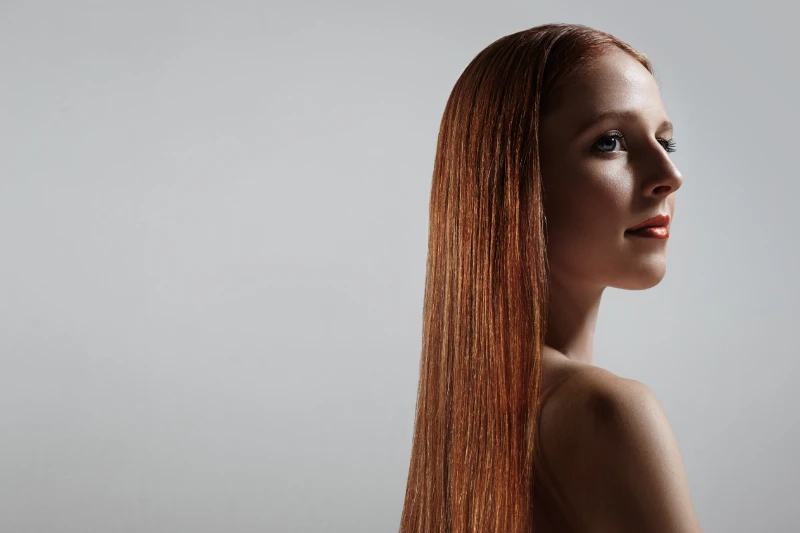
Glass hair can be adapted to many hair types, but the route to the finish changes according to texture and condition.
Fine Hair
Usually needs lightweight shine and careful product use so the hair looks reflective without becoming flat or separated.
Thick or Coarse Hair
May need more smoothing and controlled blow-drying before the surface can reflect light evenly.
Frizzy Hair
Frizz control is usually the priority. A smoothing treatment may create a better foundation than simply adding more shine serum.
Coloured Hair
Gloss or shine-focused care can make colour look richer and more dimensional, provided the hair is in suitable condition.
Dry or Damaged Hair
If roughness comes from damage or dehydration, improving condition may need to come before chasing maximum shine. A reflective finish cannot disguise serious breakage or severely compromised ends.
Reflective styling depends partly on hair condition, which is why hair treatments for shine and condition may be a better starting point when dullness is linked to dryness or damage.
If you are not sure whether your hair needs repair, moisture, smoothing or shine, our guide to professional hair treatments explains how the main salon treatment types differ and which concerns they are designed to address.
Does Glass Hair Work on Curly or Wavy Hair?
Yes, but “glass hair” does not have to mean removing every trace of natural texture.
On curly or wavy hair, the goal can be controlled frizz, smoother definition and stronger shine rather than forcing the hair into a completely straight shape.
If you want the classic straight, mirror-like version seen in many reference photos, more blow-drying and heat styling will usually be involved.
If preserving curl pattern matters more, the treatment and styling approach should be adjusted accordingly.
Glass Hair vs Keratin Treatment: What Is the Difference?
The two can overlap visually, but they are not automatically the same service.
A glass hair result is focused on high shine and a polished surface.
A keratin treatment is primarily selected when frizz reduction, smoothing and easier daily management are the main goals.
Keratin can therefore help create the foundation for a glass-like finish on coarse or unruly hair, but someone with naturally smooth hair may not need a keratin service simply to increase shine.
Choose the Problem Before the Treatment
If your hair is already smooth but looks dull, focus on shine.
If it is dry or damaged, focus on condition. If frizz is preventing the smooth finish you want, smoothing may be the more useful route.
How Long Does a Glass Hair Treatment Last?
There is no single duration for every glass hair service because “glass hair” can describe several different routes to the same visual finish.
A styling-only glass effect may last until the next wash or until humidity changes the shape.
A professional gloss or shine treatment can last longer, while smoothing services may influence manageability for a different period again.
The specific formula used, washing frequency, heat styling, hair porosity and home care all affect how quickly the visible shine fades.
If a salon promises a specific number of weeks, ask which exact service the estimate refers to.
The longevity of a blow-dry, gloss, shine treatment and keratin service should not be treated as if they are interchangeable.
How to Make the Glass Hair Effect Last Longer
- Use the aftercare recommended for the actual treatment. A gloss and a keratin service may have different maintenance requirements.
- Use heat protection. Repeated high heat can make the surface feel rougher and reduce the polished appearance.
- Avoid overloading the hair with product. Heavy oils and styling residue can make shine look greasy rather than reflective.
- Condition according to hair type. Fine hair may need lightweight moisture, while coarse or porous lengths may need richer conditioning.
- Protect hair from repeated chlorine exposure. Pool water can affect both condition and colour.
Can You Get Glass Hair at Home?
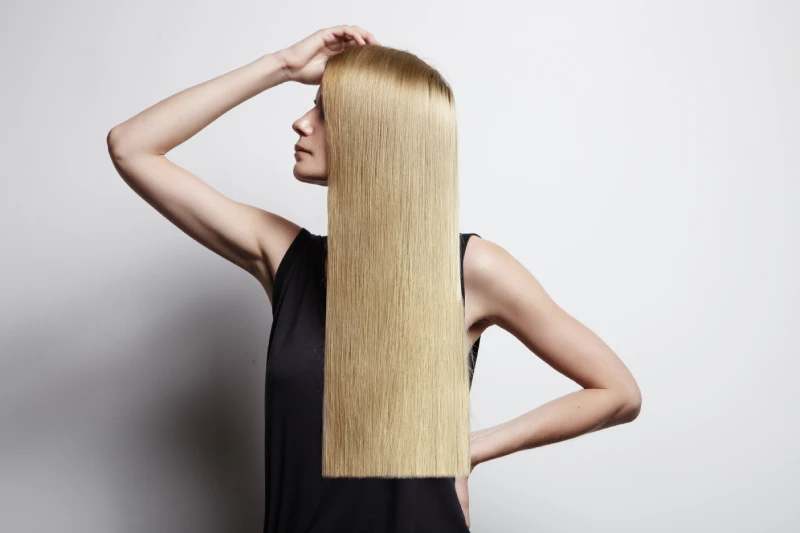
You can create a temporary glass-like finish at home if the hair is already in reasonable condition and responds well to smoothing.
The basic principles are the same: condition the hair appropriately, use heat protection, dry in a controlled direction and finish with a small amount of shine-enhancing product.
The difference is that a salon can assess whether dullness is really a styling issue or whether the hair would benefit more from conditioning, glossing or smoothing first.
The final surface effect is also created through technique, which is why a professional blow dry and styling in Staines can make a visible difference to smoothness and shine.
Is Glass Hair Damaging?
The glass effect itself is not a type of damage, but the way it is created matters.
Repeated high-temperature straightening on already fragile hair can increase dryness and breakage.
A professional approach should therefore account for previous bleach, colouring, existing breakage and how much heat the hair can reasonably tolerate.
If the hair is severely compromised, improving condition should take priority over creating maximum surface shine.
For hair that is breaking, over-processed or weakened by bleach and repeated colouring, see our guide to the best hair regeneration treatments for damaged hair before choosing a purely shine-focused service.
Does Glass Hair Work on Blonde, Brunette and Coloured Hair?
Yes.
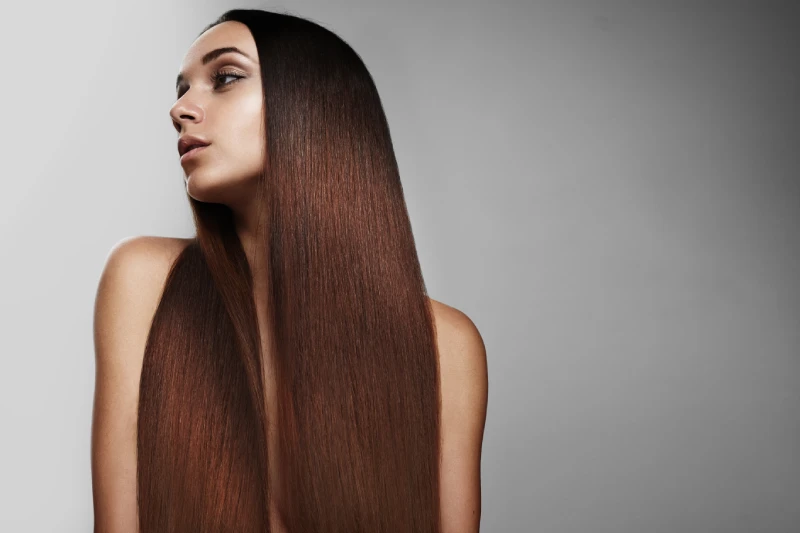
Dark hair can show strong mirror-like reflection because the contrast between light and the hair surface is very visible, while blonde hair can gain a brighter, cleaner-looking finish when the surface is smooth.
On coloured hair, shine can also improve the appearance of dimension because light reflects more evenly from the lengths.
If the issue is faded or unwanted tone rather than surface dullness alone, a colour gloss or toner may be more appropriate than a purely cosmetic shine treatment.
Is Glass Hair Still a Trend in 2026?
Yes, although it now makes more sense to treat glass hair as a finish rather than a short-lived social-media hairstyle.
Current beauty coverage still places high-gloss, smooth hair prominently among 2026 hair trends, particularly through professional glossing and polished styling.
The reason it continues to work is simple: shine is not tied to one haircut or colour.
A bob, long layers, brunette colour, blonde hair or a sleek blow-dry can all carry the same glass-like finish when the surface is smooth enough to reflect light clearly.
If you want to see how polished finishes fit into broader seasonal styling, our guide to current hair trends covers the cuts, colour directions and finishes influencing salon looks now.
Frequently Asked Questions
What is a glass hair treatment?
A glass hair treatment is a salon service aimed at creating an exceptionally smooth, reflective finish. The exact process can vary and may involve conditioning, glossing, smoothing and professional styling depending on the starting condition and texture of the hair.
How long does a glass hair treatment last?
It depends on the service used to create the effect. A styling-only result may last until the next wash, while professional gloss, shine or smoothing treatments can last longer. Washing frequency, porosity, heat and aftercare all influence longevity.
Is glass hair the same as a keratin treatment?
No. Glass hair describes a smooth, reflective finish, while keratin treatment is primarily used for smoothing, frizz reduction and manageability. Keratin can help create a glass-like result, but not every client seeking shine needs keratin.
Is glass hair the same as a hair gloss?
Not exactly. A gloss is one possible route to greater shine and may also refresh tone, while a glass hair result can involve gloss, conditioning, smoothing and styling together.
Can you get glass hair on curly hair?
Yes. Curly and wavy hair can be given more shine and smoother definition without necessarily being permanently straightened. The treatment and finishing method should be adapted according to whether you want to preserve or temporarily smooth the natural texture.
Does glass hair work on fine hair?
Yes, but fine hair generally needs lightweight products and careful smoothing so the finish looks glossy rather than flat or overloaded.
Can damaged hair have a glass hair treatment?
Possibly, but the condition of the hair should be assessed first. If the lengths are breaking, severely dry or over-processed, repair or conditioning may be more important than maximising shine immediately.
Want the Glass Hair Effect in Staines?
The best route depends on whether your hair needs shine, conditioning, smoothing or simply a more polished finish.
At Style Avenue in Staines, we can assess your hair texture and condition and recommend the most suitable way to create a smooth, reflective result.