
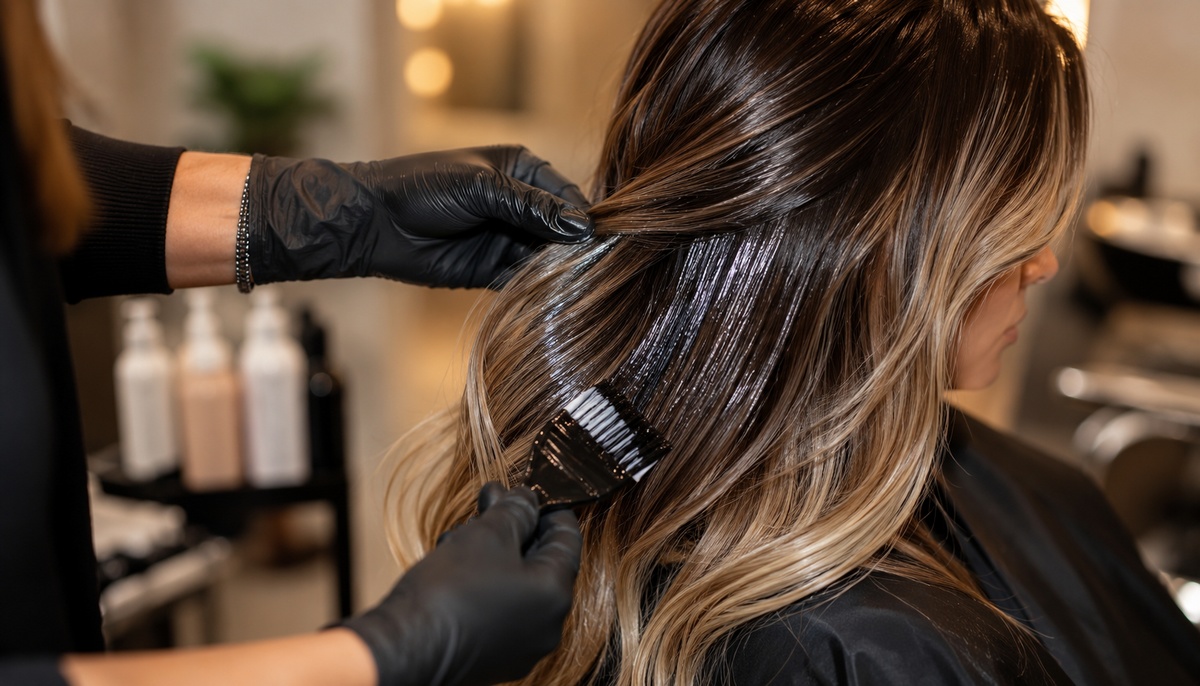
Professional hair treatments are most useful when they solve a specific problem rather than simply adding another product to your routine.
In the salon, we often see clients choosing a treatment by name because they have heard of Olaplex, keratin or a gloss, even though their hair is asking for something slightly different.
That matters because breakage, dehydration, frizz, dull colour and scalp build-up do not all have the same cause, so they should not all be treated in the same way.
The most effective approach is to look first at your hair’s condition, texture, colour history and styling habits, then match the treatment to the problem you actually want to improve.
This guide explains the main types of professional hair treatments, what each one is best suited to, how they differ and when a salon treatment makes more sense than another mask at home.
Which Professional Hair Treatment Does Your Hair Need?
In practice, choosing the right treatment becomes much easier once you stop comparing brand names and start with the main concern you can see or feel in your hair.
| Main hair concern | Treatment to consider | What it is designed to improve |
|---|---|---|
| Breakage after bleaching or repeated colouring | Bond-building treatment | Internal strength, resilience and reduced breakage |
| Frizz and difficult daily styling | Keratin blow dry | Smoothness, manageability and resistance to humidity |
| Dry, rough or dehydrated hair | Deep conditioning or moisture treatment | Softness, flexibility and moisture balance |
| Weak or over-processed hair | Protein or reconstruction treatment | Strength and structure |
| Dull colour or loss of shine | Gloss or shine treatment | Tone, surface smoothness and reflective shine |
| Product build-up or an oily, congested scalp | Scalp treatment | Scalp cleanliness, comfort and product build-up |
This is only a starting point because two clients can describe their hair as “dry” while one actually needs moisture and the other has structural damage from repeated chemical processing.
The useful question is not “What is the best hair treatment?” but “What is causing the problem I want to fix?”
A stylist can assess porosity, elasticity, texture, previous colour services and current breakage before recommending the most suitable option.
Signs Your Hair May Benefit From a Professional Treatment
The clearest sign that home care is no longer doing enough is when the same problem returns immediately after washing, conditioning or styling.
- Breakage or snapping. Short broken strands around the hairline, crown or ends often appear after repeated bleaching, colouring or heat styling.
- Persistent roughness. Hair that still feels coarse after conditioner may need a more targeted moisture or repair treatment.
- Frizz that is difficult to control. If humidity changes the shape and texture of your hair within minutes, a smoothing treatment may be more useful than another styling product.
- Colour that looks flat or brassy. A gloss or toner can often refresh the finish without repeating a full colour service.
- Excessive tangling. Increased knotting can be a sign that the hair surface has become rougher or the strands are more fragile.
- Loss of elasticity. Hair that stretches excessively when wet or feels unusually weak needs careful assessment before further chemical services.
- Build-up at the scalp. Heavy product use, dry shampoo and styling products can leave the scalp feeling coated even after regular washing.
If your hair has recently been lightened, chemically processed or significantly changed in colour, it is particularly important to assess its condition before adding another intensive service.
Bond-Building Treatments: What Are They Best For?
Bond-building treatments are most relevant when hair has been weakened by bleaching, colouring or repeated heat exposure.
Hair contains chemical bonds that contribute to its strength, and chemical processing can disrupt some of those bonds.
Olaplex uses Bis-Aminopropyl Diglycol Dimaleate, an ingredient developed to support disulphide bond repair in damaged hair.
At Style Avenue, Olaplex is available as an in-salon treatment for damaged or chemically treated hair, and an Olaplex chemical upgrade can also be added to colour or bleach services.
That makes bond support particularly useful when the goal is to protect vulnerable hair during a colour appointment rather than waiting until the damage is already visible.
The salon also offers an Olaplex 4-IN-1 Mask for clients who need a more conditioning-focused treatment for softness, moisture and shine.
Best suited to: bleached hair, colour-treated hair, weakened strands and hair that breaks more easily than it used to.
If repair is your main concern, the dedicated professional hair treatments and conditioning services in Staines page explains the treatment options currently available at Style Avenue.
Olaplex vs K18: Are They the Same Type of Treatment?
Olaplex and K18 are often discussed together because both are associated with damaged, chemically processed hair, but they use different technologies.
Olaplex is based around its patented bis-aminopropyl diglycol dimaleate chemistry, while K18 uses a proprietary peptide technology designed to interact with keratin chains in the hair.
From a client’s perspective, the important point is that neither product should be chosen simply because it is currently more popular online.
The better choice depends on the condition of the hair, what chemical services have been performed and which professional system the salon uses.
At Style Avenue, Olaplex is the bond-repair system confirmed in the current treatment menu.
If you are comparing Olaplex with another repair system, ask your stylist what problem they are trying to correct and why that treatment suits your hair history.
Keratin Treatments and Keratin Blow Dry
A keratin blow dry is a smoothing service, so its main job is different from a bond-building repair treatment.
The treatment is applied to the hair and sealed with heat to create a smoother surface, reduce frizz and make the hair easier to manage.
Style Avenue’s keratin blow dry is designed for frizzy, coarse, wavy or difficult-to-manage hair and is offered for different hair lengths and densities.
The salon states that its keratin treatment is formaldehyde-free, and the service is intended to reduce frizz without permanently changing the hair in the way traditional chemical straightening does.
With suitable aftercare, Style Avenue advises that the smoothing effect can last around 8 to 12 weeks, although the exact result depends on hair type, washing frequency and home care.
- Choose keratin when your main problem is frizz or daily manageability.
- Choose bond repair when your main problem is structural weakness after colouring or bleaching.
- Consider both at different stages if your hair is both chemically processed and difficult to manage.
For the full process, suitability and aftercare advice, see the keratin blow dry treatment in Staines service page.
Protein and Reconstruction Treatments
Protein and reconstruction treatments are most useful when hair feels weak, tired or over-processed rather than simply dry.
Style Avenue currently lists the Milkshake Integrity Treatment as one of its options for weakened or chemically processed hair.
This type of treatment is designed to support the structure and condition of compromised hair while improving its feel and appearance.
The main practical distinction is that dry hair and damaged hair are not always the same thing.
Hair that lacks moisture may become softer with conditioning, while structurally weakened hair may need a treatment selected specifically for repair and resilience.
Best suited to: chemically processed hair, brittle lengths, weakened ends and hair that no longer feels as resilient as it did before repeated colour services.
Deep Conditioning and Moisture Treatments
Deep conditioning is usually the better choice when the hair feels dry, rough or difficult to detangle but is not showing major signs of structural breakage.
Professional conditioning treatments use salon products selected according to hair texture, porosity and current condition.
Style Avenue’s current treatment menu includes options such as the Wella Intense Mask and Olaplex 4-IN-1 Mask, allowing the stylist to choose a conditioning approach according to the hair’s needs.
This matters because fine hair may become heavy with a treatment designed for coarse, dehydrated lengths, while thick or porous hair may need more conditioning than a lightweight formula can provide.
Which Treatment Is Best for Fine, Thick, Curly or Coloured Hair?
Hair type changes how a treatment should be selected and applied, even when two clients have the same visible concern.
Fine hair
Usually benefits from lightweight conditioning and carefully selected repair products that do not leave the hair flat or overloaded.
Thick or coarse hair
Can often tolerate richer conditioning and may benefit from smoothing when frizz and manageability are the main concerns.
Curly or wavy hair
Usually needs a decision between preserving natural texture with moisture-focused care and reducing frizz with a smoothing service.
Bleached or highlighted hair
Should be assessed for breakage and elasticity before another chemical service, with bond support often forming part of the plan.
Colour-treated hair
May benefit from repair, conditioning and glossing depending on whether the main issue is strength, dryness or faded tone.
A consultation is valuable because texture alone does not tell the full story; porosity, previous services and daily heat styling can change what the same hair type needs.
Gloss and Glass Hair Treatments
Gloss and shine treatments are best suited to hair that looks dull, lacks reflective shine or needs a colour refresh between larger appointments.
A gloss can adjust tone and improve surface shine without creating the same level of change as a full permanent colour service.
Style Avenue also offers a Glass Hair Shine Treatment aimed at creating a smoother, high-shine finish.
The salon’s separate guide to glass hair treatments and the glass-hair effect goes deeper into how this type of finish works and who it suits.
If your dullness is mainly colour-related, a professional gloss or toner may be a better next step than choosing a repair treatment that does not address tone.
Is a Hair Gloss the Same as a Toner?
Glosses and toners overlap, but salons may use the terms differently depending on the colour system and the goal of the appointment.
A toner is commonly used to adjust or neutralise unwanted tones after lightening, while a gloss may be chosen to refresh tone, enhance dimension and increase shine.
For balayage, highlights and other dimensional colour, the finishing treatment should be selected according to the colour result rather than treated as an automatic extra.
If you are deciding between colour techniques first, the balayage vs highlights guide explains how the two approaches differ.
When Does a Scalp Treatment Make Sense?
A scalp treatment is useful when the problem begins at the scalp rather than in the lengths of the hair.
Product build-up, excess oil and heavy use of dry shampoo can make the scalp feel congested even when the hair itself is in reasonable condition.
Professional scalp care may include cleansing, gentle exfoliation, massage or products selected for a particular scalp concern.
Persistent itching, inflammation, significant flaking or sudden hair loss should not be treated as a routine salon issue, because these symptoms can require assessment by an appropriate healthcare professional.
This distinction is important because a cosmetic salon treatment can improve cleansing and comfort, but it is not a substitute for medical diagnosis.
Salon Treatment vs Home Hair Mask: What Is the Difference?
A home mask is useful for maintenance, while the main advantage of an in-salon treatment is professional assessment and more precise product selection.
At home, it is easy to assume that every rough or frizzy feeling means “dryness” and keep adding heavier masks.
In the salon, the stylist can look at elasticity, porosity, breakage, previous colour services and the way the hair behaves when wet before deciding whether the priority is moisture, repair, smoothing or tone.
That assessment also helps prevent over-treating hair with products that do not address the real problem.
How Often Should You Have a Professional Hair Treatment?
There is no useful universal schedule because treatment frequency depends on the service, hair condition and what happens to the hair between appointments.
| Situation | Typical approach |
|---|---|
| Regular colour or lightening | Discuss bond support as part of colour appointments and reassess condition each visit |
| Dry hair without major breakage | Use professional conditioning when needed, supported by suitable home care |
| Frizz and difficult styling | Keratin may be repeated once the previous smoothing effect has gradually faded |
| Dull colour | Gloss or toner can be used between larger colour appointments when tone needs refreshing |
| Heavily processed or fragile hair | Build the schedule around condition and recovery rather than a fixed calendar |
The safest approach is to reassess the hair each time instead of automatically repeating the same treatment because a certain number of weeks has passed.
What Should You Do Before a Major Colour Change?
Hair condition should be assessed before a major lightening or colour correction because the desired shade is only one part of the decision.
If the hair already shows breakage, poor elasticity or heavy previous processing, the stylist may recommend improving its condition before pushing the colour further.
This is particularly important when moving significantly lighter, because repeated lightening can increase stress on already weakened hair.
Style Avenue offers professional hair colouring services in Staines alongside repair and conditioning options, which allows colour planning and hair condition to be considered together.
How to Maintain Salon Treatment Results at Home
The best aftercare depends on the treatment you have had, so the stylist’s advice should take priority over a generic routine.
- Use the shampoo and conditioner recommended for your treatment. Some smoothing and colour services require gentler cleansing to maintain the finish.
- Use heat protection before hot tools. Repeated high-temperature styling can undermine the condition you are trying to improve.
- Do not assume more product means more repair. Fine or low-porosity hair can become heavy when overloaded with rich treatments.
- Be gentle when hair is wet. Wet hair is easier to stretch and damage, especially when it has already been chemically processed.
- Keep colour and treatment appointments coordinated. Your stylist should know what has been used on your hair before planning the next service.
- Book a trim when the ends are genuinely split. Treatments can improve feel and appearance, but they cannot permanently rejoin a split end.
Professional Hair Treatments: The Simple Rule
Choose the treatment for the problem, not for the name on social media.
Breakage points towards repair, persistent frizz towards smoothing, dehydration towards conditioning, dull colour towards glossing, and scalp build-up towards targeted scalp care.
Frequently Asked Questions
What are the most common types of professional hair treatments?
In salon, the main groups are bond-building treatments, protein or reconstruction treatments, deep conditioning, keratin smoothing, gloss or shine services and scalp treatments, with the right choice depending on the condition and goal of the hair.
Which professional hair treatment is best for damaged hair?
For genuinely damaged hair, the first job is to identify whether the weakness comes from broken internal structure, dehydration or both, because heavily bleached hair may need bond support while dry but otherwise healthy hair may respond better to conditioning.
Is Olaplex a protein treatment?
No, Olaplex is primarily a bond-building system rather than a traditional protein mask, which is why it is commonly used when chemical processing has weakened the hair.
Is keratin the same as a bond-building treatment?
No, and this is one of the most common points of confusion: keratin services are mainly chosen for smoothing and manageability, while bond-building treatments target structural damage associated with chemical and heat processing.
Can a professional hair treatment repair split ends?
No treatment permanently rejoins a split end, although conditioning and smoothing products can temporarily make damaged ends look and feel better, so a trim is still needed when the strand has physically split.
Can I combine a hair treatment with colour?
Yes, and this can be particularly useful when the treatment is selected as part of the colour plan, such as adding Olaplex support during a chemical service or finishing a colour appointment with a suitable gloss or conditioning treatment.
How do I know whether my hair needs moisture or protein?
The difference is not always obvious at home, so look at the full history of the hair: persistent dryness may point towards moisture, while weakness and breakage after chemical processing can indicate that a more structural repair approach should be considered.
How long does a keratin blow dry last?
At Style Avenue, the expected result is generally around 8 to 12 weeks with suitable aftercare, although hair type, washing frequency and daily routine can make the smoothing effect fade sooner or last longer.
Not Sure Which Hair Treatment to Book?
At Style Avenue in Staines, the starting point is your hair’s current condition, colour history, texture and what you want to change, not simply the treatment name you have seen online.
We can assess whether your priority is repair, conditioning, smoothing or shine and recommend an option from the salon’s current professional treatment menu.